Recordings Vol. 1
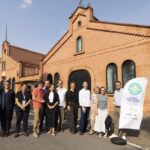
Virginia Bazán-Gil Reelected as FIAT/IFTA President
Joined by New Executive Council Members

Recordings Vol. 1

The FIAT/IFTA World Conference 2025 was held in Rome, Italy, under the theme Everything is possible and nothing is true?
To celebrate a World Conference to remember, we will be publishing recordings from a curated selection of the sessions from Rome. New videos will be available every Friday until September 18, just a few weeks ahead of the World Conference 2026 in São Paulo, Brazil.
This week’s theme is “Archives in the Age of AI”, and the selected sessions are:
You can access all current and future recordings on our YouTube channel and the FIAT/IFTA World Conference 2025 page.
The Ethical Challenges of Artificial Intelligence
by Paolo Benanti
Third Order Regular of St. Francis
Exploring the Impact of GenAI in Audiovisual Archives
by Dale Grayson and Louise Broch
Northbound TV, DR
The Value, Use and Copyright Commission of FIAT/IFTA would like to present the recent year’s work researching the impact of generative AI on the audiovisual archiving sector. GenAI impacts the authenticity, integrity, and future accessibility of archival content, and the goal was to write a paper with insights from broadcasting archives who already implemented GenAI. The paper presents guidelines on these aspects:
• Allowing archives to be used for GenAI training – What are the implications, rights, and permissions?
• Handling GenAI-generated content – Addressing authenticity, ownership, and copyright challenges.
Exploring Experimental Machine Learning in Film Restoration: Ethical, Local AI Models for Color, Spatial, and Generation Recovery
by Fabio Bedoya
Filmfinity
This presentation explores experimental machine learning techniques in film restoration, focusing on the development of small custom trained AI models tailored to the needs of archival materials. Unlike commercial AI tools optimized for contemporary media, these models are designed specifically to address the unique forms of degradation found in historical film elements. By working with localized datasets and film specific characteristics, the approach avoids overgeneralization and preserves the distinct aesthetics of the original material. The presentation covers restoration tasks such as color recovery, either guided by reference materials (such as prints, internegatives, or digitized analog elements) or inferred from culturally or artistically analogous sources when references are unavailable, and spatial repair techniques including gauge alignment, generational recovery, and analog video reconstruction. Emphasis is placed on ethical considerations, particularly the use of locally executed models trained only on authorized data, thereby respecting rights and provenance while ensuring archival transparency. This work argues for a shift toward practical and ethically sourced AI tools that empower archives to perform restoration work at scale without compromising historical integrity or legal clarity.
Bridging the Semantic Gap at the RTVE Archive: A Multimodal Retrieval Approach for Film in Production Research
by Virginia Bazán-Gil and Eduardo Lleida
RTVE, University of Zaragoza
The extensive audiovisual archives of Radio Televisión Española (RTVE) represent a rich, underutilized resource for production research. A particularly valuable yet challenging collection is the RTVE Film Archive, encompassing news programs from the 1950s to the late 1980s. While undergoing digitalization to improve accessibility, a significant portion of this news collection lacks accompanying sound and suffers from non-informative titles, hindering effective retrieval.
Our central research questions focus on how to effectively explore this news film collection for production needs, evaluate the performance of multimodal information retrieval technology in this context, and determine the feasibility and integration strategy of resulting metadata into the existing archive management system.
Focusing exclusively on non-textual, video-only content, we explore how to effectively represent video content in the absence of accompanying text or metadata by embedding both textual queries and video visual features into a shared vector space. This methodology utilizes the CLIP model to generate embeddings of video frames and natural language queries, constructing a multimodal semantic space where semantic similarity is measured by the proximity of representation vectors. The VTR system pipeline encompasses video analysis, semantic analysis, vector database ingestion, and search with relevance feedback, allowing users to query the film archive using natural language or example images.
The main contributions of this PoC include a demonstration of a functional VTR system for retrieving information from a film archive without relying on existing metadata, an evaluation of the effectiveness of joint semantic space representation for this task, and insights into the potential and challenges of integrating such technologies into existing media archive workflows.