Meet the shortlisted nominees!
Symposium – Papering Over the Audiovisual Archives
Call for Papers

Meet the shortlisted nominees!
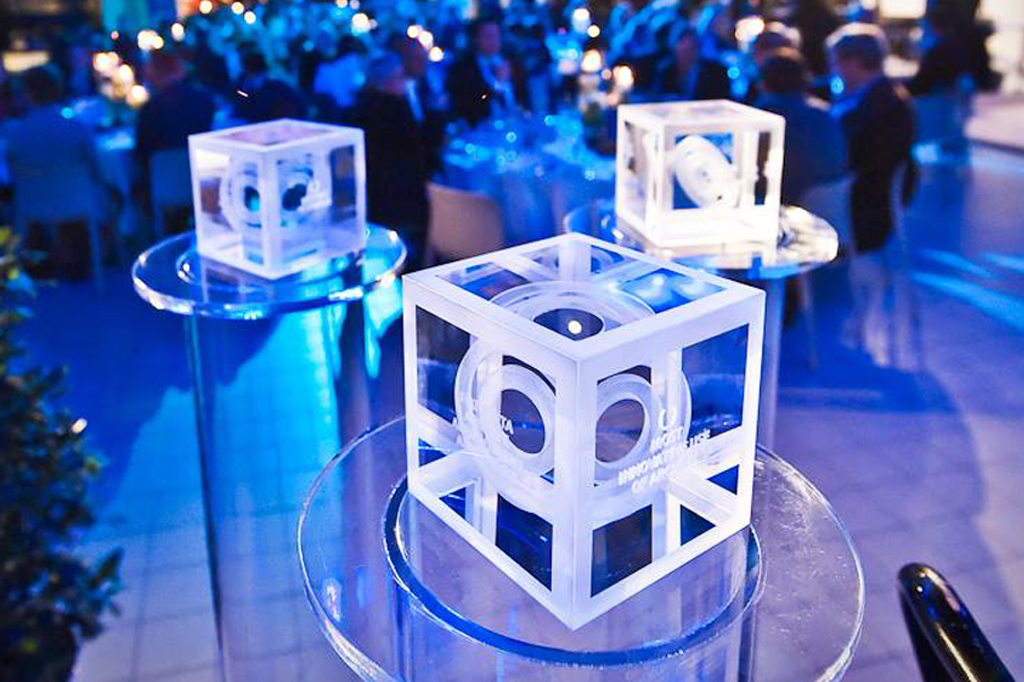
Meet the shortlisted nominees for the Excellence in Media Preservation category of the 2025 FIAT/IFTA Archive Achievement Awards!
The FIAT/IFTA Awards are designed to honour outstanding archival initiatives and projects that have significantly improved how the archives are preserved, managed and used.
The 2025 Awards Show will take place on Thursday, October 30th, in Rome, Italy, during the FIAT/IFTA World Conference. We will provide more details of the event at a later date.
RAI Newsreels Digitisation – From 16mm Films to High Quality Master Files
by RAI Radio Televisione Italiana
The project aims to comprehensively digitise RAI news programs produced between 1952 and 1985, currently preserved on 16mm film reels. This archive comprises approximately 350.000 reels (10.000 hours) and holds invaluable historical and editorial significance, documenting the early years of television in Italy when RAI was the sole national broadcaster.
The film reels are at high risk of deterioration due to the vinegar syndrome, making urgent preservation – both physical and digital – essential, utilizing state-of-the-art technology. The resulting digital version utilizes standard, interoperable formats and high-quality specifications, with 12-bit color depth video and resolution exceeding 2K.
Currently in production, the project is expected for completion by early 2026, partially funded by public resources from the Ministry of Culture. Preparation and digitisation are outsourced to external providers, under the strict coordination and supervision of RAI.
RAI ensures technical Quality Control of the digitised material, manages the film reel logistics (inbound and outbound), and creates video clips of individual news items, with synchronized audio and video.
A distinctive feature of the project is the application of artificial intelligence (AI) techniques to generate descriptive metadata, including transcriptions, facial recognition, named entities recognition, summaries.
The digitised content, along with the generated metadata, is uploaded to RAI’s content management system for subsequent reuse. A low-resolution version of the entire collection, including the metadata, will be made available through a digital platform managed by the Digital Library (commissioned by the Ministry), accessible to public bodies and universities for research and educational purposes.
Audiovisual Preservation Two Dot Zero
by National Archives of Singapore (National Library Board)
This project kick-started in 2021 when a large quantity of at-risk magnetic tapes was identified for urgent digitisation to be done inhouse in view of its condition. Challenges included timeline, equipment availability, space constraints and resources where the team had to re-configure the whole lab setup to cater to multi-magnetic formats to be digitised simultaneously.
Duplicate or multiple copies suspected of having the same content were found to co-exist in the storage and the staff initially had to sit through to preview the full duration of the content side by side to compare them. This was very labour intensive and furthermore, after validating both copies were the same, the decision to preserve which one was never straight forward and mostly subjective basing on visual preference.
With the help of advanced tools which included automated Quality Control and AI tools, these had greatly helped the team to overcome the odds and complete the project on time.
Hoping to share the benefits of advanced tools such as AI transcriptions which not only will enhance the metadata but also can be an intelligent way of identifying duplicates of the same digitised content in the collection or storage. Using the Picture Quality Analysis tool to provide an objective assessment of the quality enable us to preserve the best quality copy, especially when the origin of the digitised copies is unknown.
Digital Restoration of the film Mocny Człowiek (The Strong Man)
by Filmoteka Narodowa – Instytut Audiowizualny
The Filmoteka Narodowa – Instytut Audiowizualny (National Film Archive – Audiovisual Institute) has undertaken a full digital restoration of the Polish silent film Mocny Człowiek (The Strong Man), directed by Henryk Szaro in 1929. This film, widely regarded as the greatest Polish silent film, features an international cast and has become an icon of Polish cinematography from that era.
Unfortunately, no film elements survived in Poland due to wartime destruction, similar to the fate of the majority of Poland’s silent film collection, of which only about 5% has been preserved. Fortunately, through collaboration within FIAF, another archive – CINEMATEK – Cinémathèque royale de Belgique, discovered the only known surviving theatrical distribution print, released by a Belgian producer in a Flemish-French language version around year 2000. Thanks to excellent international cooperation, the Belgian archive digitized the nitrate material for us in 4K resolution.
The copy was severely damaged mechanically, including numerous perforation issues that made scanning difficult. Additionally, it was heavily scratched due to extensive theatrical use—having been screened hundreds of times. This made it one of the most challenging sources for digitization, but as it was the only known surviving material, we had no other choice.
The digital restoration proved to be an immense challenge. Due to extensive visible scratches and other damages resulting from heavy exploitation—such as stains, tears, significant reel-end markings, and image flickering—FINA’s restoration team had to undertake a substantial amount of manual work, which took eight months to complete. One of the most difficult tasks was the removal of a large scratch that extended across almost the entire film.
Additionally, no Polish intertitles or opening credits had been preserved. The original script and dialogue list were also lost. The Polish text had to be retranslated from the Belgian copy. Given these circumstances, FINA decided to recreate the original font based on examples from other films produced by the same studio, Gloria and surviving Polish Filmprogram distributed in cinemas. Handwritten text was also used to reconstruct intertitles of letters shown in the film. As a result, all intertitles were faithfully recreated.
The entire restoration workflow and all interventions were documented in our Collection Management System to keep process transparent with key information displayed on an information board for bigger audience. This restoration serves as an outstanding example of European cooperation in reconstructing national film collections after wartime destruction. It also showcases the full extent of our expertise and dedication.