Read the reports!

Media Management Seminar 2025
E-book now available

Read the reports!

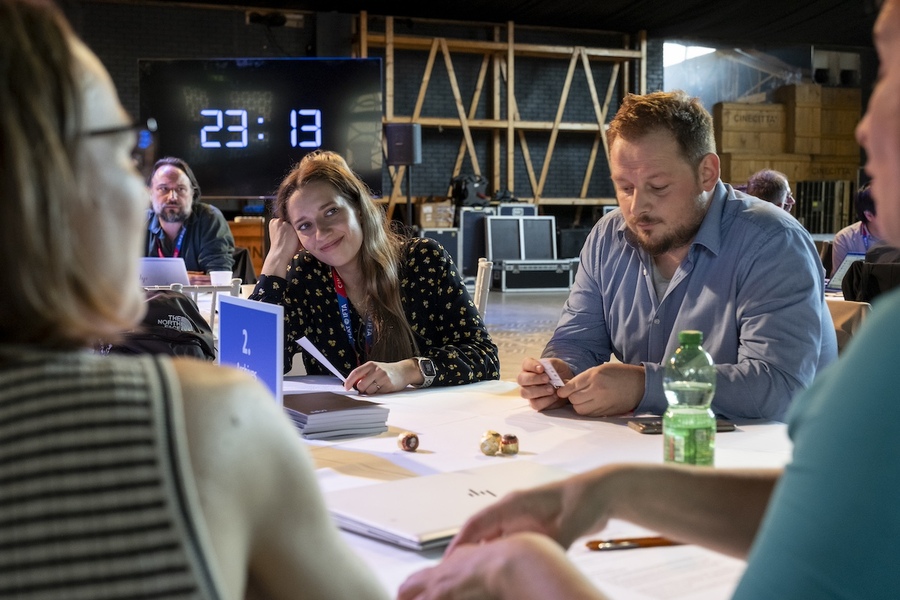
Following this year’s Expert Roundtables, we are pleased to share the reports prepared by each session’s moderator. These summaries capture the key themes discussed, questions raised, and reflections shared during the conversations. We hope these insights extend the value of the roundtables and support continued dialogue within the audiovisual archiving community.
FIAT/IFTA WORLD CONFERENCE 2025
EXPERT ROUNDTABLES REPORTS
Money’s Too Tight: Proving the Commercial Value of AV Archives
Dale Grayson & Billy Segal Gezelius
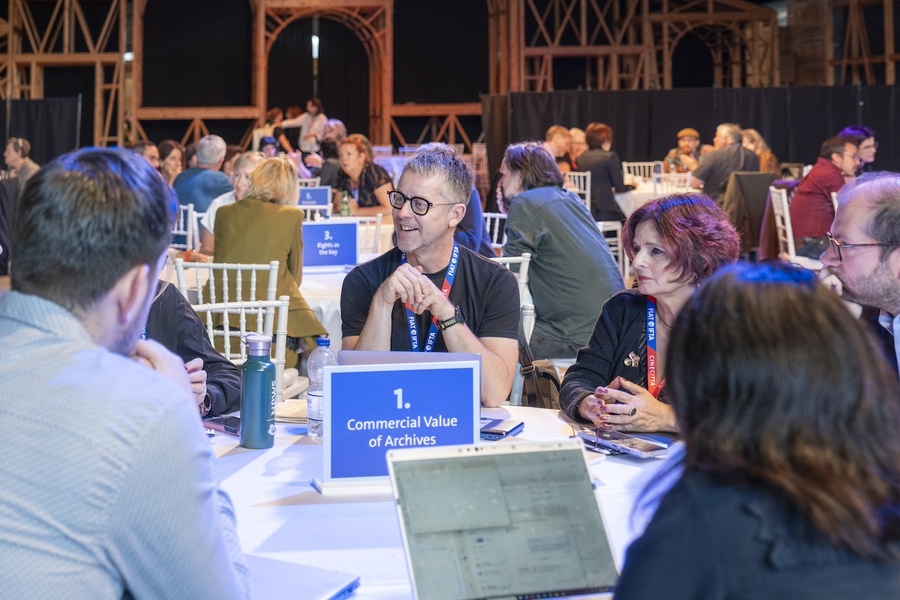
The Expert Roundtable on “Commercial Value of Archives” drew strong attendance across two sessions, with perspectives shared from Asia, South America, and Europe. All participants discussed their strategies for unlocking clip sales potential in their collections and the value this brings to their parent organizations. Clip sales are often – but not always – handled by the archive itself.
Long-form distribution was also discussed. While perceived as higher value, this is typically handled by a specialist distribution team or outsourced to a distribution company.
The conversation explored new and innovative ways to monetize collections, including opportunities on YouTube. We heard an interesting case study where archival program materials such as images and costumes were transformed into merchandising. We also heard how archives must demonstrate their total value to their organization – not only through commercial sales data but by valuing other uses such as internal re-use of the archive in the company’s own documentaries. While not a financial transaction, this shows the vital role archives play as creative resources for the production community.
The challenges of unlocking rights and creating rights management solutions inevitably emerged as a discussion theme.


Dale Grayson provides television rights and archiving consultancy through his UK-based company, Northbound Media Consultants. He brings extensive experience in television rights management, system development, negotiations, contracting, and commercial footage licensing. As a qualified library and information management specialist, he has worked extensively with film and TV archive collections throughout his career.
Until 2025, he served as Head of Rights and Policy for the All3Media Group—a network of 40 television production and distribution companies across the UK, Europe, New Zealand, and USA. In this role, he managed commercial clip rights licensing and negotiated library rights acquisition deals for sales representation. Dale currently chairs FIAT/IFTA’s Value, Use and Copyright Commission and the Royal Television Society’s Archives group. He also serves as a Trustee of the Yorkshire and North East Film Archives.
His career began at BBC Libraries and Archives, followed by a significant tenure in Rights Management and libraries and archives at ITV (1992–2018) where he established the award-winning ITV Archive clip sales business.
Billy Segal Gezelius is Head of the IPBC-KAN Radio & TV Archives and leads the digitization project of the archives (formerly IBA TV). She is a graduate of the Faculty of Humanities at the Hebrew University of Jerusalem.
She has rich experience in legal copyright issues and strong skills in the preservation of various film and video formats. Since 2000, she has been a member of FIAT/IFTA and joined the Production Commission, where she took part in professional workshops and served as a member of the International Archive Award Jury from 2002 to 2017.
In 2005, she co-founded the Forum for the Preservation of Audiovisual Memory in Israel, which aimed to change audiovisual preservation legislation in the country. Between 2005 and 2011, she was chief editor of conferences dedicated to the audiovisual memory of Israeli history as part of the Jerusalem International Film Festival.
Archives & Ethics
Louise Broch & Ruth Stifter-Trummer
The Expert Round Table “Archives & Ethics” drew a lot of attention and was very well attended — a clear sign that questions around ethical metadata, harmful language, and the re-use of sensitive AV materials are high on the agenda for many broadcast archives and AV-collections.
Preservation of Metadata and Historical Integrity: Participants widely agreed that internal databases shouldn’t be “cleaned up” by removing harmful, biased, or discriminatory metadata. Even if these records are uncomfortable, they reflect the social, political, and historical contexts in which they were created. Changing or erasing them can blur or distort the historical record. The group emphasized keeping this information visible internally, while making sure users today understand where it comes from and what it represents.
Opening Databases to the Public: When it comes to public-facing databases, the group stressed that a different workflow is needed. While internal systems can preserve historical metadata as-is, public platforms must filter or clearly label biased or harmful metadata and provide warnings or context where necessary. And when individuals ask to have their data removed or anonymized, their rights must be respected – even when this conflicts with broader institutional goals.
Re-Publishing Biased or Offensive Archival Content: Re-publishing material that contains biased or offensive content was seen as not only legitimate but often necessary in a democratic society. However, it has to be done with proper framing and contextualization so that audiences understand the background and implications. Ethical re-use isn’t just about providing access; it’s about helping viewers interpret what they’re seeing.
Handling Footage Produced Under Authoritarian Regimes: There was also a lively discussion about how to deal with materials from communist, fascist and other authoritarian systems, so-called “propaganda footage”. When re-using such material, it’s essential to consider the original context, the intentions behind its creation, and the power structures that shaped it. Without this, there’s a risk of unintentionally spreading or reinforcing narratives that were harmful then and still are now.
Need for Institutional Guidelines: There was strong agreement that archives need clear guidelines on harmful language, vulnerable groups, and sensitive materials. But it was also noted that no single universal set of rules will work for everyone. Different institutions and countries have different cultural and legal contexts, so each archive will need policies tailored to its own environment.
Outlook and Continuing Collaboration: The participants expressed strong interest in continuing the conversation and sharing practical examples, guidelines, and experiences from their own organizations. The event made clear that there is a growing, shared commitment to handling sensitive AV materials in ways that are responsible, transparent, and historically aware.


Louise Broch is an Archive Researcher with 25 years of experience with research and archiving in DR. Has experience with changing of research workflows to strengthen the relevance of the archive inside the corporation. Works also with curation and pushing of archive materials on different platforms including writing articles about archive materials on DR’s streaming platform.
Ruth Stifter-Trummer has been with the Austrian Broadcasting Corporation for 30 years, as a documentalist, researcher and archive journalist. External non-commercial requests fall within her area of responsibility, among of which are the educational sector and the academic community. To be more accessible to the public, the ORF-Multimedia Archives have been opening up outposts at Austrian universities that she is taking care of. She holds a master’s degree of the University of Vienna, in the field of science of communication and journalism and Slavic studies.
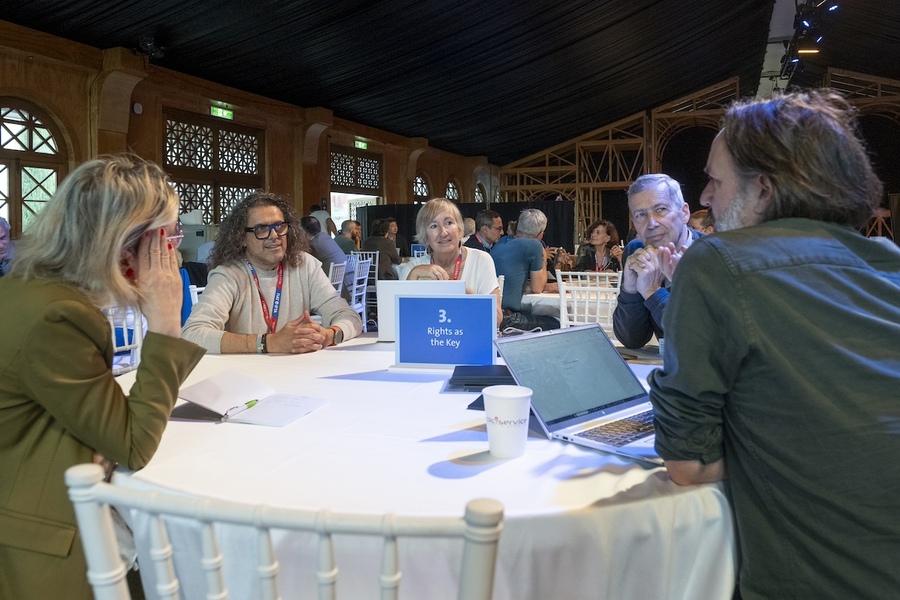
Rights Information as a Key to the Future of Audiovisual Archives
Montse Bailac & Marco Rendina
Topics and key elements that have been discussed:
Results / Outcome of the discussion
Archives should be aware that all the content published online will be used to train AI. So, why not take advantage of that? What is the balance between legal caution and enabling creative reuse?
Concrete examples being discussed: We have discussed possible approaches to managing a huge collection of works with unidentified rights holders that has been digitized by a production company. The company needs to get information about rights situation and wants revenue for the investment in digitalization. One proposal was to publish the material on YouTube in order to invite the public to help identify anyone who may own the rights to the images.
Personal comments: The participants in the Roundtable came from very different situations and had diverse needs – some were only beginning to address issues related to rights management, while others had more advanced questions and concerns
Subtopics which should / could be focused on in the future: I think that the question of AI training and offering the metadata will be relevant in the future. Arguments in favor and against. Would adopting a joint international position be beneficial?
Also, do you see technology (AI, blockchain, etc.) playing a role in rights management in the near future? How? Detection of Restricted Content? Contract Review and Tracking?


Montse Bailac is a documentalist with 40+ years of experience in archiving and research. Head of the Historic Archive at 3Cat since 2015, specializing in identifying footage, planning and conducting research, and selecting archives, always aligned with organizational goals, budgets, and deadlines. Published author and collaborator on history-related research projects. Experienced teacher in research and archival practices, training future documentalists. Member of FIAT IFTA’s Value, Use, and Copyright Commission. Active participant in European projects including VIDEOACTIVE, EUSCREEN, WATCHINGVIDEOS LIKEHISTORIAN, MOSAIC, and WAIVE.
Marco Rendina is senior consultant at Istituto Luce – Cinecittà, following the international projects. Marco has been working for two decades with museums, archives and libraries across Europe, supporting them in their digital transformation, advocating for open access, gaining extensive experience in Digital Libraries design and implementation and fostering innovation in the cultural heritage sector in Europe. He is a member of the Board of Directors in various international cultural heritage organisations and networks, like the European Fashion Heritage Association, the Jewish Heritage Network and the EUscreen Foundation.
Hosting Researchers in the Archives
Dana Mustata & Bas Agterberg
The expert table ‘Hosting Researchers in the Archives’ was moderated by Bas Agterberg (Netherlands Institute for Sound and Vision) and Dana Mustata (University of Groningen) on behalf of the Media Studies Commission.
Our aim for this Roundtable was to exchange ideas and foster dialogue on practices and procedures for hosting and supervising academics doing research in audiovisual archives. We were particularly interested in exploring together with those interested ways in which archivists and academics work together, and in doing so, reflect on what may constitute fair and ethical practices of accessing broadcast archives for research purposes.
The roundtable was attended by various stakeholders. There were researchers who had worked closely with broadcast archives or had the double expertise of having worked in an archive while also conducting academic research. Among attendees, there were also representatives of archive institutions seeking to discuss strategies for engaging researchers with their archives so as to promote research on topics relevant for their collections. There was also the representative of an institution specialised in publishing and enabling digital access to archival materials for educational and research purposes.
One question that emerged early on in our discussions was about how to facilitate study exchanges among FIAT/IFTA archives for academics working on topics such as the institutional cultures of audiovisual archives or the business models of different archives. Other questions concerned ways in which researchers could contribute to the archives they study and play a role in creating added value for the archives in question. We also discussed how to close the gap between archives and academics and find mutually beneficial ways of collaboration.
In our exchanges, we arrived to understandings about how researchers with close and perhaps longer-standing collaborations with archives are able to gain an insider’s perspective on the working cultures within archive institutions, and this insider’s perspective can play a key role in forging mutually beneficial partnerships between academic research and archives. Inspired by one of the presentations at the conference, it was also noted in the discussions how a shift within archives from custodianship to curatorial practices can serve as an advantage for fostering collaborations with academics, inviting their specialised expertise into these curatorial practices. We became aware how researchers may have knowledge of archival materials across countries and are able to offer transnational perspectives on themes and topics relevant for specific national audiovisual archives. In that respect, we thought that archive-based transnational research can bring different archive collections managed by institutions within national borders in conversation with each other over shared histories or other relevant commonalities. This in itself can be yet another way in which FIAT/IFTA can bring member archives together into shared dialogues.
Through our discussions with representatives from archive institutions we learnt some of their needs and interests concerning academic research into their collections. Some of these collections lends themselves to research about journalistic editorial choices and standards, which can help offer solutions for news production amidst today’s challenges with disinformation. It was also considered that researchers can help with documentation and metadata enrichment. Researchers with specific expertise can help share their know-how and provide trainings to junior archivists or become part of the conversation on archiving choices made within an institution. We also realised that it is important for archives to know how and if researchers engage with the archive material, they make available online. For institutions who seek to publish and enable digital access to archival materials, or curate thematic entry points to archival materials for educational and research purposes, it is important to understand the needs of the demographic they aim to reach.
It was particularly striking to observe the many intersections in conversation between the different stakeholders present at the roundtable. The gap between archives and academics that came up early on in our discussions may in fact speak much more to the need for more sustained and formalised opportunities for dialogue, than fundamental discrepancies between the two stakeholders. Prioritising an active shared dialogue between archives and academics – in different formats and in the context of different events and activities organised by FIAT/IFTA and the Media Studies Commission – can help address that need. It was encouraging to observe at the roundtable exchanges that connoted a mutual valuing and support for the work that archivists do and the expertise that researchers can bring to the table.
Through exchanges with our roundtable discussants, we understood how the Media Studies Commission is in the position to brings researchers and archives closer to one another in ways that benefit both stakeholders. We also gained insights into how the MSC can continue to enable and hold space for mutual dialogues between archives and researchers beyond our existing initiatives. The conclusions of the expert table further encouraged us to involve FIAT/IFTA archive members into the drafting of the Call for Projects that we issue every year for the Media Studies Grant. In that respect, we will circulate a survey to the community to gain more insights into the collections, topics and phenomena that archive stakeholders need academic expertise on and would like to invite researchers to engage with.


Dana Mustata is assistant professor in television and audiovisual culture at the University of Groningen in the Netherlands. Her research focuses on Romanian television, television histories in the former socialist Eastern Europe and European perspectives on television archives. She is the co-founder and coordinator of the European (Post)Socialist Television History Network and has been a principal investigator on the research projects ‘Television Matters. Material Historiographies in Cold War Europe’ and ‘Television Histories in (Post)Socialist Europe’. She is one of the editors-in-chief of VIEW Journal of European Television History of Culture and the chair of the FIAT/IFTA Media Studies Commission.
Bas Agterberg is curator at the Netherlands Institute for Sound and Vision. He is an expert of the use of audiovisual collections for (historical) research. He participates in defining collection policies, acquisitions and presentation of the collection in the museum. He is involved in research on transnational collections, like Radio Netherlands Worldservice , Europe TV and colonial film collections. Results of his cooperation include publications and online presentations like Radiogarden. Bas Agterberg has a background in Film and Television Studies He worked as film producer, Utrecht University and Utrecht School of Arts. In FIAT/IFTA he is a member of the Media Studies Commission.
Get prepared for an everchanging professional future
Christine Braemer
This table gathered participants whose situations were rather different: missions, size of the teams, and also their own role and hierarchical position.
To guide the discussion, two sets of cards around the notion and challenges of skills in audiovisual archives were proposed to the attendees.
The participants’ issues were mainly:
A focus was made on the profession of media librarian.
The participants were able to exchange on:
The needs identified were mainly: “classic” technical skills that are becoming quite rare (restoration, analogical video…), AI, advocacy about archives, soft skills (flexibility, open mindset) in order to adapt to constant changes.
Topics for the future:

Christine Braemer graduated with a master’s degree in history, a postgraduate diploma in Publishing and Documentation, and a Higher Diploma in Educational Engineering. For ten years, she worked as an audiovisual documentalist at INA. She now works in the Training Department (INA Campus) as a training manager, in charge of the Digital Heritage and Multimedia Documentation training programs. She organises training courses in France and internationally, as well as Digital Learning courses. She also contributes to consulting missions on educational methods and adult training in the field of audiovisual archives.
AI in Multimedia Archives: Opportunities, Value Creation and Risk Management
Stefan Kollinger & Marco Mursteiner
This report summarizes the two roundtable discussions on Generative AI at the FIAT/IFTA World Conference in Rome, both moderated by Stefan Kollinger, Chief Innovation Officer at ORF. Participants have been public service broadcasters, news agencies, archives, vendors and researchers from Europe, Asia, Latin America and the Middle East to explore how AI is reshaping archival practice, with a particular focus on trust, metadata, rights and authenticity.
A central theme in both rounds was the use of AI for enrichment, indexing and discovery. Several organizations described large, fully digitized archives with only a fraction richly catalogued. One broadcaster reported of million hours of content, of which only 20–25% has detailed human created metadata. For the remaining material, AI is increasingly used for speech to text, object and scene recognition and auto-tagging, as well as semantic and vector search (“find a man waving his right hand” across millions of frames). Reuters shared how AI already suggests titles to journalists and could similarly support with titles and descriptions for archive footage.
Despite this perspective, the discussions repeatedly returned to the possible failures of current systems and the continued need for human curation. AI based colorization was cited as a good way to create a “base layer” for restorers, but hallucinated colors and historical inaccuracies mean experts must still correct results. In accessibility, large public broadcasters like ORF are moving to AI enabled subtitling because of regulatory obligations to reach near 100% subtitling and this cannot be met with human labor alone. Here, participants accepted that some errors are inevitable, but that imperfect subtitles are better than no service for targeted audiences. Across use cases, archivists stressed that AI should remain a tool, not an autonomous system in archive processes. Humans must add historical and social context, correct misclassifications, and avoid filling archives with low quality or misleading metadata that future generations will have to clean up.
Rights management and copyright in the AI era have been identified as a major concern. Archives and broadcasters are being approached by companies seeking to license content as training data, often at surprisingly low prices, while there is still no clear market standard for valuing such rights. The group discussed whether image recognition, similarity search or even blockchain could help match assets to rights holders, but no single mature, scalable solution was identified. At the same time, tensions are growing as some customers assume AI will make indexers and documentary makers “unnecessary,” even though the tools are not yet able to match professional quality.
Authenticity, provenance and labelling formed another large block of the conversation. Participants noted the increasing use of synthetic voices, AI generated images and animations in external productions delivered back to broadcasters, often without disclosure. This raises the risk of ingesting synthetic content into archives unknowingly, undermining trust in historical collections. Several organizations are therefore turning to technical standards such as C2PA to stamp content with machine-readable provenance from the point of capture (e.g. via cameras) through to distribution. However, maintaining these credentials across MAM, editing, playout and archive workflows is seen as “heavy lifting,” and there is no consensus on how far to go -> should every real image be tagged, or only AI-generated elements?
Both rounds also highlighted the limits of purely technical solutions and the importance of media and AI literacy. Participants observed that broadcasters may apply relatively strict ethical standards to AI, but audiences spend much of their time in environments like TikTok or other social platforms where synthetic media is widespread. Several participants argued that critical thinking and media literacy must be strengthened from school age, and public broadcasters have a responsibility to help audiences understand and question AI-generated content.
Finally, there was discussion of cost and infrastructure. Some archives rely on cloud AI services with per hour pricing, which makes long-term planning difficult as volumes are huge and model prices are volatile. Others invest in on-premise hardware to process unlimited content but face high entry costs. Broadcasters reported that the rapid evolution of large models can make pilots economically unusable at scale. Participants agreed they would prefer to “buy technology, not volume,” but current vendor offerings rarely match that preference.
In terms of outcomes, the roundtables did not produce formal recommendations but identified a few shared conclusions. AI is now indispensable to make large archives searchable, but human oversight remains essential, particularly for ethics, historical context and rights. Authentic, verified content will likely gain value in a world where most online material is synthetic, but this will only be realized if provenance and labelling are handled properly. Rights frameworks, training data licenses and fair pricing are still largely unresolved. And beyond tools and policies, media and AI literacy in the wider public will be crucial to maintaining trust in archives and public service media as AI-generated content becomes the dominant reality online.


Marco Mursteiner is an innovation specialist with over 20 years of experience in media technology, currently working in Innovation Management at ORF’s Directorate for Technology and Digitalization. His expertise spans AI for media applications, broadcast technology, and digital transformation. Previously, he served as Digital Transformation Project Manager and spent 17 years as an editor for ORF Kärnten, where he worked in TV reporting, radio news, and as Head of Social Media. He also contributed to the European Broadcasting Union (EBU) as Mixed Zone Manager for Alpine Ski Sports and was recognized with the European Technology & Innovation Award. Marco has demonstrated versatility across broadcast media, combining journalism, technical expertise, and innovation leadership throughout his career.
Stefan Kollinger is an experienced media technology professional currently serving as Chief Innovation Officer at ORF and Chair of the EBU Think Tank for Technology & Innovation. With over 15 years of industry experience, he specializes in strategic innovation initiatives focusing on AI and Smart Producing technologies. Works collaboratively across departments to ensure ORF remains at the forefront of digital transformation, efficiently utilizing latest technologies to enhance program quality and reach. His expertise spans system architecture, solution design, stakeholder management, and process optimization across web, app, OTT projects, and broadcast technology. His key competencies include innovation leadership, strategic planning, and digital transformation, and he is certified in agile methodologies, creative organization, and project conflict management.
Degralescence: just another word of warning to preservationists, or are archivists now resigned to the spoils of a throw-away era?
Charles Fairall
The first roundtable session of the afternoon was very well attended with 7 attendees plus the chair. Broadcast TV archives, heritage institutions and service providers were all represented. Individual introductions and discussions were fast paced and energetic and the allocated time passed seemingly very quickly. A broad range of concerns were openly aired, with considerable diversity in challenges evident. One organisation had already digitised 70% of videotapes while another had only just scratched the surface. All agreed that the challenges for succeeding with future digitisation are on an increasing path, not only due to tape degradation, diminishing skills and machinery but also from the risk of diminishing corporate knowledge and understanding. While the multitude of magnetic tape formats poses a particular risk in this regard, it was also noted that detailed understanding of the technical aspects concerning film quality will likely also decline rapidly as experts retire. Throughout the session there was a strong sense of support from the service providers present at the table, offering professional assistance in building cases for digitisation, specifically aimed at stakeholders who might benefit from objective help to understand the bigger picture from both cultural and commercial perspectives.
The second roundtable session could not have been more different than the first, with just three attendees; two from the same organisation and one from a commercial service provider. Nevertheless, it proved to be a most informative and fruitful occasion and with just a small group could focus on some very specific challenges concerning preservation of A/V materials in extremely challenging climate conditions in Southeast Asia. Along with some specific discussions around conservation practices and machine maintenance to address mould and high moisture content, similar to the first session the conversation eventually swung round to the challenges practitioners face when managing stakeholder expectations. Again, the service provider offered some comfort that this was not necessarily a local issue and that there was likely a growing need for deeper understanding and recognition of the practicalities (and sometime stresses) of working with obsolete and degrading tapes and how that ultimately balances against the high value of collections otherwise locked within them. The session concluded following a welcomed reminder from the PMC chair, who joined the table and encouraged the use of documented FIAT-IFTA guides to help in the mission to inform the decision makers.

Charles Fairall began his career in broadcast television as an engineer and realising there was a growing need for technologists in the cultural heritage sector made the decision to focus on the challenges posed by one of the world’s great collections, the BFI National Archive. Working in roles both operational and in senior management across four decades, Charles has been at the cutting edge of transforming the analogue and digital processes essential to the well being and accessibility of complex materials selected for long-term preservation. Having helped pioneer and lead many major infrastructure and mass digitisation projects, guiding teams of conservation specialists into new working practices, Charles’ role is now focused on legacy engineering, videotape formats and equipment. Charles is an Incorporated Engineer, Chartered Manager and member of the FIAT-IFTA PMC.
Guardians of Authenticity
René Duursma
Archiving is inherently political – decisions about what to preserve or forget shape collective memory and history. Archives can either empower or suppress narratives, depending on who controls them. While modern Western European archives often strive to balance power, state influence and political manipulation remain significant risks, as seen in examples like Poland’s politicized archives or U.S. patriotic bias.
Our discussion started highlighting the emergence of counter-archives and community archives as responses to institutional power but notes they too can distort narratives. The main challenge is bridging communication gaps between national institutions and local communities, ensuring authenticity, accountability, and representation.
Where I wanted to talk about fencing of political influence we first discussed the general language being used in this discourse as Eurocentric. For instance, the Global South feels as a colonial remark, since there is not One South. Then again, there’s also not one Europe.
The following questions were raised:
So the discussion became more semantic, we were talking about the backbone and philosophy of archiving and representation to start of the bigger question of how to handle pressing political influence. There were no direct answers here.
The main issues or talking points:
Conclusion:
The idea that financial independence from political powers (e.g., avoiding state co-productions) can help preserve authenticity. It’s best to anchor independence from political influence in law. Being an independent or private archive doesn’t exempt them from political influence. The call is for archives to resist political influence, experiment with community partnerships, and act as guardians of truth and authenticity in an age of geopolitical change and disinformation.

René Duursma is Curator of Audiovisual Materials at the Groningen Archives since 2005. Leading a small team of six people and a group of volunteers, he is dedicated to the ongoing digitization and metadata management of the collection. Duursma is constantly involved in projects aimed at the general public, often in collaboration with partner organisations. He is a member of the Dutch AV Archive Domain Council (AVA_NET) and serves as the Chairman of NORAA (regional filmarchives in the Netherlands). In addition to his work at the archive, Duursma is a musician (Kinetophone) and moderator of film events.
What prevents open access to audiovisual archives?
Sae Goto & Patrick McIntyre
Things that stop archives from being open or restrict access: for many, there is a gap between what we would like to share, and what we can share. Rights aren’t the only obstacle.


Sae Goto is a member of the Copyright & Archives Centre at NHK Enterprises, Inc., the chief affiliate of NHK, Japan’s public broadcaster. After a year of training in production, she joined the copyright and archives centre, where she provides guidance to production teams while applying her expertise in copyright law and rights clearance. Sae works with both broadcast and distributed content across documentaries, drama, and variety shows. Since 2024, she has been contributing as a researcher to NHK’s documentary series, “Century on Film -Butterfly Effect-“.
Patrick McIntyre‘s career in the Australian arts and cultural sector spans more than thirty years. Prior to joining the National Film and Sound Archive of Australia as CEO in 2021, Patrick was executive director of Sydney Theatre Company, one of the world’s largest nonprofit theatre producers, associate executive director of The Australian Ballet, and general manager of Sydney Film Festival. He has held marketing roles at the Sydney Opera House and Sydney Dance Company. He is an executive councillor of FIAT/IFTA and is a Life Member of industry peak body Live Performance Australia in recognition of ten year’s service on its council. Patrick has presented at conferences on topics including videogame preservation, placemaking and the value of culture in Australia, the US, Hong Kong and Europe, and has also worked extensively as an arts and entertainment writer.
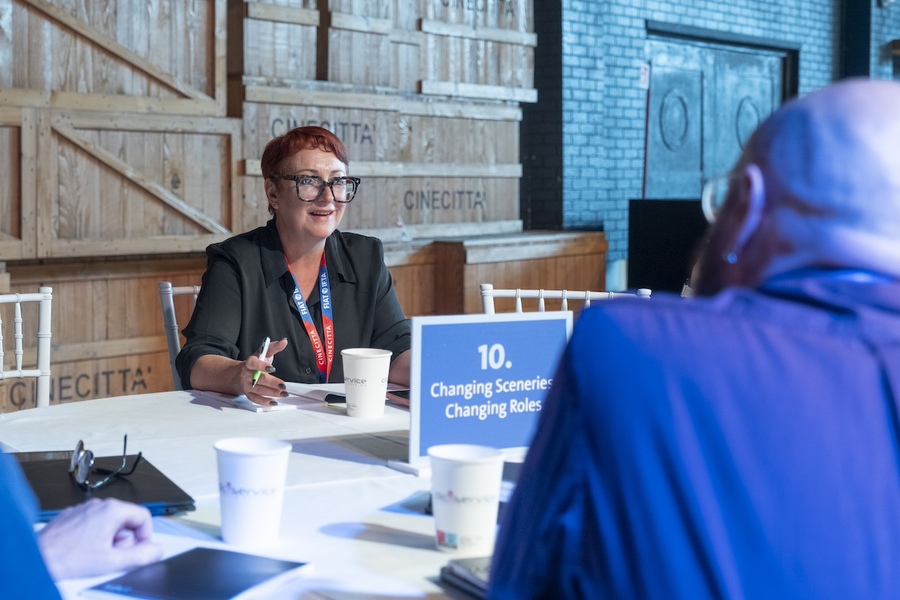
Changing Sceneries, Changing Roles – Collaboration for Exploitation
Jennifer Wilson
Libraries and Archives (including evolving roles within these institutions) are currently navigating a complex landscape of challenges:
The critical need to incorporate contextual considerations, ethical guidelines, and institutional values when negotiating and entering into agreements with AI technology providers.

Jennifer Wilson is Senior Curator at BBC Scotland, where she leads archive teams preserving and unlocking decades of content. With 28 years at the BBC, in roles ranging from Bi-Media Librarian to Archive Manager, she’s seen and been part of the evolution of BBC Archives. As Co-Chair of the FIAT/IFTA Media Management Commission, she has been able to further explore how technology reshapes archive access and archival roles.