Archive Achievement Awards 2026

The FIAT/IFTA Archive Achievement Awards are designed to honour outstanding archival initiatives and projects that have significantly improved the ways in which the archives are preserved, managed and used. Any initiative that brings the professional preservation and management of audiovisual archives to a higher level, any project that valorises the use of archives in an outstanding way, is eligible to enter.
Members of FIAT/IFTA can nominate their organisation, or they can nominate a person or organisation with whom they have collaborated. The FIAT/IFTA Archive Achievement Awards winners are announced during the FIAT/IFTA World Conference.
The deadline to submit nominations closed on Wednesday, April 8, 2026.


FIAT/IFTA awarded Theo Mäusli the 2025 Lifetime Achievement Award.
Since 2014 FIAT/IFTA has also given a special Lifetime Achievement Award to a person with special merits for FIAT/IFTA and for the field of audiovisual archiving as a whole. This year the jury honoured someone…
FIAT/IFTA awards Theo Mäusli the 2025 Lifetime Achievement Award.
Since 2014, FIAT/IFTA has kept a wonderful tradition — to use this moment to recognise someone who has truly shaped our community. Someone whose work has left a lasting mark, not only on this federation, but on the whole world of media archiving.
This year, we have the honour of celebrating a very special person. Our awardee started his journey in the academic world, with a PhD in cultural history. His research explored how his favourite kind of music was perceived in his country during one remarkable decade. Already then, it was clear — this was a curious and creative mind, someone who understands how culture, technology, and society are deeply connected.
Later, he joined the Italian-language branch of his national broadcaster, where he led the archives with vision and courage. At a time when “mass digitisation” was still just a dream for many, He was already making it real. He introduced a robotic workflow, and was among the very first to bring speech-to-text from the research lab into daily archival work.
Later on, he joined the General Management of the broadcasting group, ensuring that archival knowledge and collaboration were shared across all language regions. But his curiosity has always gone beyond management. He is also one of the most respected historians of broadcasting in his country —writing about music, the social history of radio, and the cultural value of audiovisual archives in the digital age. He has always managed to bridge two worlds — the academic and the practical — showing that ideas and action can go hand in hand.
Within FIAT/IFTA, he served on the Executive Council from 2016 to 2024, including a term as Treasurer. He has been a strong supporter of our Save Your Archive projects — first in Zimbabwe, and later in Ukraine — always combining professional expertise with genuine human solidarity.
Many of us know him as a bridge-builder — between people, between disciplines, between past and future. For more than 35 years, he has been a leader, a mentor, and a friend. And yes… his family name means “little mouse” in his mother tongue. But anyone who has met him knows — there is nothing small about him: not his stature, not his achievements, and not his generosity.
So, with great admiration, respect, and affection, it is a pleasure to present the FIAT/IFTA Lifetime Achievement Award 2025 to our dear friend: Theo Mäusli.
Meet the shortlisted candidates!
SHORTLISTED CANDIDATE
The Olympic Images Sport AI Programme
by IOC / Olympic Foundation for Culture and Heritage
About
The IOC Images Sport AI Programme is transforming how Olympic heritage is discovered, documented and shared. Launched in 2024, it combines AI with archival expertise to improve access to 130 years of Olympic photographs and audiovisual content. Its aim is twofold: to enhance search within The Olympic Media Library and accelerate metadata creation through automated tagging.
AI-powered image and video similarity search enables discovery of visually related content beyond text-based queries, while a conversational assistant allows natural-language exploration of IOC archives and verified sports information. In the IOC’s media asset management environment, the first AI-powered automated tagging release is in production for Winter Sports. Ahead of LA28, Summer Sports-specific tags are being developed with the ambition to build, by 2028, a unique and groundbreaking corpus covering 65 Olympic disciplines.
Combining cutting-edge AI with human expertise, the programme makes Olympic archives more accessible, discoverable and inspiring for audiences and future generations.
SHORTLISTED CANDIDATE
Bowerbird Australian Speech Engine: Unlocking the Australian National Audiovisual Collection with AI
by NFSA
About
Bowerbird is a groundbreaking, machine learning-enabled transcription and metadata enrichment engine developed by the NFSA.
Recognising that commercial AI tools often fail to capture the nuances of the Australian identity, the NFSA built Bowerbird to accurately transcribe Australian-accented English, idioms, and First Nations place names. To date, the project has processed over 150,000 hours of audiovisual content, transforming “dark” linear archives into a fully searchable, data-rich digital resource.
By integrating “Human-in-the-Loop” (HILT) workflows, Bowerbird ensures archival integrity while dramatically reducing the cost and time of manual transcription—estimated at a $10 million saving. It represents a shift from passive preservation to active, data-driven discovery, enabling researchers and the public to find stories previously hidden within millions of items.
SHORTLISTED CANDIDATE
Voices Unlocked: Activating the Sound Archive of Radio Nacional de España through Artificial Intelligence
by RTVE
About
“Voices Unlocked” is an innovative project by RTVE that transforms the sound archive of Radio Nacional de España (RNE) into an accessible, discoverable, and user-oriented resource through Artificial Intelligence.
RNE preserves one of Spain’s most valuable audio heritage collections, documenting decades of cultural, political, and social history. However, like many large audiovisual archives, much of this content has traditionally been difficult to access, search, and reuse.
By combining automatic speech recognition, semantic analysis, and AI-driven classification, the project converts vast volumes of unstructured audio into fully searchable, time-coded, and meaning-based content. This enables users to explore the archive not just through metadata, but through themes, concepts, and narratives.
The initiative significantly increases the visibility and usability of the archive, allowing journalists, researchers, and editorial teams to quickly discover and reuse historical material. It also lays the foundation for future public-facing services that will open this sound heritage to wider audiences.
Beyond its technological innovation, the project redefines the role of the audiovisual archive—from a passive repository into a dynamic, living system that supports storytelling, transparency, and public service.
“Voices Unlocked” demonstrates how AI can unlock the full value and potential of audiovisual collections, placing the archive at the center of user engagement and cultural memory.
SHORTLISTED CANDIDATE
TV Cultura Documentation Center (CEDOC)
by TV Cultura
About
The CEDOC Documentation Center of the Padre Anchieta Foundation (TV Cultura) is structured into five main areas: Audiovisual Collection, Library, History Center, Audio Archive, and Collection Access. With the exception of the latter, each area is dedicated to a specific type of documentation and is responsible for the preservation, management, and dissemination of its holdings.
The Audiovisual Collection is organized into seven specialized units: Film Library, Video Library, Photography, Digital Lab (Editing), Cataloging, Indexing, and Content Research. The Audio Archive comprises Cataloging and Digitization units. The Collection Access area, in turn, is responsible for providing access to the various types of materials, serving both individuals and institutions through licensing and exchange agreements, on either a paid or free basis.
The CEDOC modernization and digitization project began in July 2021 with the renovation of spaces and storage facilities to ensure the preservation of the collections. It was structured around four main pillars: the acquisition of both state-of-the-art and legacy equipment for analog-to-digital conversion; the renovation and implementation of eight technical storage facilities; the deployment of a Media Asset Management (MAM) system across all areas; and the professional training of new technicians and interns.
By early 2024, all equipment had been acquired and the renovation of the storage facilities had been completed. In addition, a team of 80 technicians, including 15 interns, was working within the new workflows across all areas of CEDOC.
By the end of 2025, the new MAM system implemented through the project—serving all areas of the TV network—was fully operational for the film, photo, and video collections, and undergoing customization for the remaining areas.
SHORTLISTED CANDIDATE
Reuters Bureau Rushes Preservation Project
by Reuters
About
The Reuters Bureau Rushes Digitization Project addressed a critical preservation challenge: 15,000 hours of undigitized video and 45,000 photographs across 16 bureaus on 4 continents facing format obsolescence, inadequate storage, and threats from conflict and environmental disaster.
The content represents pivotal moments in history including rushes from 9/11, the Siege of Sarajevo and Putin’s first presidency. The greatest challenge was metadata paucity – handwritten notes, cryptic abbreviations, often illegible, making even digitized material undiscoverable. Our approach photographed tape cases to preserve original context, then deployed AI technology to generate time-based searchable metadata.
We built permanent infrastructure – the Reuters Media Ingest Hub: an integrated facility for the end to process of digitization, AI enrichment and ingest, with portable kit for on-site preservation in locations where material export is not feasible. This newly accessible content has directly supported 20+ documentary productions in 2025, with producers citing the material as transformative and video journalists reconnecting with decades of their work.
The methodology was shared at the FIAT/IFTA World Conference in 2025, for industry-wide knowledge transfer. This project demonstrated that strategic workflow design can make complex, at-risk collections with missing metadata both preservable and discoverable – ensuring journalism’s visual records remain accessible to storytellers who help us understand our shared history.
SHORTLISTED CANDIDATE
Digitisation Service of Film Collections Owned by the Archivio Storico Luce of Cinecittà S.p.A.
by Cinecittà
About
The Film Digitisation Service of the Archivio Storico Luce is a large-scale preservation programme dedicated to safeguarding one of Europe’s most significant audiovisual collections.
Carried out at Cinecittà in Rome, the project aims to preserve a unique audiovisual heritage spanning more than a century. It involves the digitisation of 13,000 film reels across a wide range of image and sound formats, many of which are threatened by physical deterioration and chemical decay. The initiative integrates traditional archival practices with advanced digitisation technologies, supported by state-of-the-art equipment and highly specialised in-house expertise.
Supported by the European Union’s NextGenerationEU programme, the project also required a significant, time-bound expansion of staff, with personnel recruited specifically for the duration and trained through structured knowledge-transfer programmes.
Beyond preservation, the initiative ensures long-term accessibility to Italy’s audiovisual heritage, making these historical images and sounds available for research, education, and future generations.
SHORTLISTED CANDIDATE
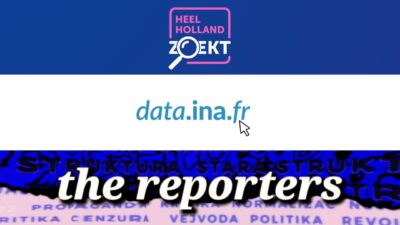
Heel Holland Zoekt
by Sound & Vision
About
On October 2, 2026, television in the Netherlands will celebrate its 75th anniversary—a milestone that Sound & Vision (Beeld & Geluid) will celebrate grandly with the entire country. It will be a year filled with festive activities, but above all, a year in which we take an important step together with the public: completing our national television archive.
Our archive is not yet complete—we are searching for objects, clips, and personal stories to supplement the collection. These hidden treasures may have been preserved anywhere: in attics, in cupboards, or captured on old video tapes. This jubilee year offers the perfect opportunity to track down these missing links in our media history, secure them, and record the stories behind them.
That is why Sound & Vision is organizing a national search in which everyone can play a part. Whether you are a former TV maker, a loyal viewer, young or old—the entire Netherlands is called upon to look for television-related objects, photos, and recordings that make our archive more complete. Through an engaging public campaign and local events, we invite everyone to share their finds and the accompanying stories with us. Together, we will fill in the missing chapters of our collective television history.
This mission is more than just a search: it is also a gift to the Netherlands! Sound & Vision digitizes and archives the discovered recordings to ensure they are preserved for the long term. They will then be made accessible to everyone via our new online portal, The Treasury (de Schatkamer), while physical finds will be given a place in the Media Museum. There, visitors can admire them in exhibitions or within the archive itself.
In this way, our television heritage remains alive and accessible—now and in the future. This ensures that new generations also have the chance to discover the rich history of Dutch television.
SHORTLISTED CANDIDATE
The Reporters
by Czech TV
About
The Reporters is a five-part audiovisual documentary series exploring television news production in late socialist Czechoslovakia through the work of individual journalists. Each episode focuses on one television reporter, combining archival footage with personal testimony to examine how news was created within a centrally controlled media system.
Based on archival research and oral history, the series investigates the relationship between journalistic practice, institutional constraints, and television’s role in shaping everyday reality. A distinctive feature of the project is its recontextualization of archival materials through the perspectives of their original authors, linking personal experiences with broader editorial and political structures.
The project is intended for both general audiences and media historians. Released on 1 April 2025, The Reporters is distributed through Czech Television’s platforms and accompanied by articles, discussions, lectures, and other public-facing activities, demonstrating the enduring value of archival footage.
SHORTLISTED CANDIDATE
Data.ina.fr
by INA
About
Launched on October 3, 2024, data.ina.fr is a public platform developed by INA (French national audiovisual institute) to unlock the value of audiovisual archives by transforming them into long-term, interpretable data about the media treatment of global current affairs. Data.ina.fr proposes a new way of making sense of media archives by revealing trends, structures, and evolutions across time.
The project is grounded in two core ambitions. First, to create a tool for long‑term objectification of information by using audiovisual archives beyond their mere documentary value. Second, to promote AI literacy among the general public through educational infographics explaining how these tools work, full transparency about how data is produced and processed and by alert texts on detected AI hallucinations.
Developed collaboratively, data.ina.fr combines INA’s editorial expertise, its strong data and technological skills and reliable AI-powered media analysis. The platform is designed for a broad audience: journalists, researchers, students, educators, and citizens. It allows users to explore more than one million hours of analysed archives through clear indicators, comparable time series, and transparent methodological explanations. Each graphic is accompanied by pedagogical content explaining its scope, limits, and interpretation, ensuring that users understand what the data shows and what it does not.
One year after it was launched, data.ina.fr has become a reference for journalists, educators, scholars, and numerous professionals. In 2025 alone, over 3.5 million impressions were recorded on the website and its editorial extensions, a 138% increase from the previous year.
Accessible free of charge, data.ina.fr embodies a democratic approach to archives. It equips citizens and professionals with tools to explore, question, and contextualise the media landscape, reinforcing trust, transparency, and informed public debate. Doing so, it demonstrates how audiovisual archives, when activated through data, can become a living resource for society.
SHORTLISTED CANDIDATE
1945 – It All Started Then “Oil, Black Blood”
by Korean Broadcasting System
About
Oil, Black Blood examines how the global struggle for oil reshaped the modern world before, during, and after World War II. As mechanized warfare expanded on an unprecedented scale, oil emerged as the decisive resource that determined military capability, national survival, and imperial ambition. Nations no longer fought solely over territory or ideology, but over access to fuel that powered tanks, aircraft, ships, and industrial production.
Through rare archival footage, declassified wartime records, and interviews with leading international historians and experts, the episode traces how oil influenced critical wartime strategies and outcomes—from Germany’s drive toward synthetic fuel and the Eastern Front, to Japan’s southern expansion, and the Allied powers’ efforts to secure global supply lines. Oil shortages, embargoes, and strategic bombing campaigns reveal how energy vulnerability shaped the fate of entire nations.
The documentary also explores how the end of the war did not conclude the battle for oil, but instead transformed it. New alliances were forged, geopolitical influence was recalibrated, and the foundations of the postwar global order were laid around energy security. Oil, Black Blood reveals how decisions made in the shadow of war continue to define global politics, conflict, and power in the present day.
SHORTLISTED CANDIDATE
Radiosa – The Story of a Radio Orchestra
by RSI
About
Founded in 1940, the Radiosa Orchestra was a constant presence in the radio, television and concert life of Italian-speaking Switzerland right up until 1985. Not only that: the Radiosa was the ensemble that accompanied the first Eurovision Song Contest in 1956 in Lugano!
The fascinating history of this orchestra has been turned into a documentary that traces the most significant milestones in the Radiosa’s history: archive interviews, testimonies from musicians who played in the ensemble, and reinterpretations of pieces performed by young jazz musicians bring to life the story of an important musical institution.
The valuable archive material blends with modern footage thanks to our wonderful guest Julie, who literally travels back in time by physically stepping into the archive footage to meet the key figures of the past who made the Radiosa Orchestra a benchmark for what were then known as pop music orchestras.
SHORTLISTED CANDIDATE
Vienna Killing: Jack Unterweger
by The Thursday Company / ORF
About
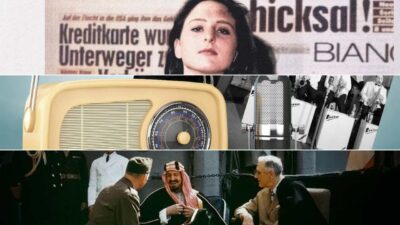
After 16 years in prison, the prison gates opened for Jack Unterweger on May 23, 1990. He had been sentenced to life imprisonment for murder but was released prematurely following petitions from the Austrian cultural scene. Behind bars, he had become a writer and gained fame as “prison poet”. His “successful rehabilitation” led to his early release.
While Unterweger was a welcome guest at parties in the following months, he murdered at least nine women in Austria, in former Czechoslovakia and in the U.S. – nearly all of them were sex workers. In 1994, one of the most spectacular trials in Austrian criminal history took place. Its outcome remained uncertain until the very end.
The three-part true-crime documentary “Vienna Killing: The Unterweger Story” sheds new light on the life of the Austrian serial killer – primarily from the perspective of his then-18-year-old fiancée, Bianca. The three-part series deconstructs the Unterweger myth and reveals the blind spots of one of Europe’s most spectacular criminal cases. Previously unpublished archival footage and secretly recorded phone calls from prison offer disturbing insights into the killer’s manipulative psyche.
Friends of the victims appear on camera for the first time and, in emotional interviews, provide insight into the Viennese milieu of the 1990s. Instead of portraying Unterweger as a sexy serial killer, the focus shifts to his victims. Biographical vignettes give the murdered women a voice and tell their stories beyond the headlines.
The intention of the Director Kirsten Brandt was to tell the Jack Unterweger case in a radically new way – from a female perspective: “Through this shift in perspective, we see Unterweger through the eyes of the women who came closer to him than anyone else. At the center is Bianca Mrak, who, as an 18-year-old pupil, was the fiancée of the serial killer and fled with him to the U.S. Her journey from Vienna to Miami becomes an emotional road trip navigating seduction, control, and the struggle for self-determination. Today, she speaks more openly than ever before about her relationship and her liberation.”
The three-part-series, a co-production by The Thursday Company and ORF, was broadcast in ORF on Oct 16, 2025.

AWARDS 2026
THE CATEGORIES

This award rewards archive technology projects which have experimented, developed and implemented new and emerging media management technologies and tools opening up the archives in new and efficient ways.

This award rewards projects in the domain of analogue or digital preservation that have successfully developed and operated a preservation process that excels in professionalism, innovation, or sustainability.
This award rewards projects that illustrate the best use of archive content in an audiovisual or audio production. All kinds of audiovisual and audio genres and formats are accepted: documentaries, game shows, entertaining programs, educational programs, news items, etc.
This award rewards initiatives that reflect on the value of audiovisual archives by increasing their visibility and exploring new ways of exploiting specific user groups and audiences, contributing to access and discoverability, storytelling, ethics, etc.