Recordings Vol. 4
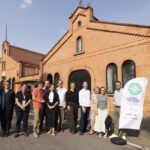
Virginia Bazán-Gil Reelected as FIAT/IFTA President
Joined by New Executive Council Members

Recordings Vol. 4

The FIAT/IFTA World Conference 2025 was held in Rome, Italy, under the theme Everything is possible and nothing is true?
This week, we publish the fourth volume of recordings, under the theme “Access, Reuse & Public Value”. Here are the selected sessions:
You can access all current and future recordings on our YouTube channel and the FIAT/IFTA World Conference 2025 page.
New videos will be available every Friday until September 18, just a few weeks ahead of the World Conference 2026 in São Paulo, Brazil.
The Role of Archives in Content Production: Reuse to Reinvent
by Emanuele Balossino, Alessia Natalino, Giorgia Montanari
Mediaset
The increasing demand for engaging cost-effective content within the television industry has catalyzed a paradigm shift in how archival materials are utilized. This project explores the transformative potential of archive-based content production in the Focus thematic television channel, within the TV schedule of Mediaset— the leading commercial television in Italy. By leveraging previously unused and mostly unknown archive footage, particularly raw and semi-edited materials, the project demonstrates how these resources can be reimagined to create fresh, relevant television programming while conserving both financial and creative resources.
Central to this initiative is the collaboration between the Mediaset Archives and Media Management department (archivists/researchers and video-editors) and the Production and Editorial departments of Focus TV, who work together to unlock the hidden value of audiovisual archives.
The process begins with a creative ideation phase, where new concepts are developed in line with Focus TV’s strategic objectives and audience expectations. Archival unseen footage is then carefully scouted and evaluated for reuse, with a legal framework in place to ensure the appropriate rights and permissions for each asset. The next steps involve the crafting of the narrative, writing of scripts, and the post-production stages, culminating in the final broadcast.
By reusing and reinventing archival materials, the project not only breathes new life into the audiovisual heritage of the network but also contributes to the preservation and strategic value of archival assets. This process demonstrates the evolving role of the archivist, not simply as a custodian of materials, but as a key player in the editorial and creative processes.
The potential of the project extends beyond the creation of new content. The use of AI-powered documentation tools such as speech-to-text and speech recognition enhances the searchability and accessibility of archived materials, making them easier to retrieve for future projects. Furthermore, the project opens up new opportunities for collaboration with other TV channels to promote the reuse of archival materials, fostering a broader exchange of audiovisual resources within the industry.
This case study highlights the value of audiovisual archives as a strategic, creative asset, and showcases how the cyclical reuse of archival content—within the context of circular media economies—can result in innovative, cost-efficient productions. Furthermore, this project is a testament to the critical role that also private commercial television archives, such as those of Mediaset, can play in shaping the future of content production, proving that even commercially-driven networks can innovate and enhance the value of their archival assets in the global media landscape.
Emanuele Balossino is currently Project and Digital transformation manager at Mediaset (Italian commercial broadcaster). Graduated in managerial engineering, he previously worked as management consultant over telecommunication and media industry, leading business strategy and technology innovation projects. He joined Mediaset in 2011, starting the company digitization journey. He’s currently in charge of change management and digital innovation over Sport, News and Infotainment areas, focusing over content production, broadcasting and distribution, cataloguing and archiving processes. He’s currently involved in cross-department projects for content cataloguing, migration and promotion initiatives; he daily liaises with final users, technology and operations specialists, to ensure roadmap definition and implementation, projects governance, resource programming and skills/roles development. Since 2014, he is in charge of international collaboration and networking, and nowadays active member of FIAT/IFTA Media Management committee.
Alessia Natalino and Giorgia Montanari are Media Specialists at Mediaset.
From Custodianship to Curation: The Evolution of the BBC Archivist Role
by Josephine Haining
BBC
In 2023 the BBC Archive Curation Team was established with a new remit to ‘Maximise the value of the archive through the re-use, re-purposing and re-imagining of Our Collections’. This new approach has required us to consider how to use our existing skills while developing new ones.
In this presentation I will talk about how the BBC Archive has evolved over the last 20 years to a Digital First model, and the impact this has had on our mission, structure and job roles. I will share how we have defined and launched an Archive Curation Strategy, with an emphasis on the skills we are developing in our teams through our Curation Training Programme. I will explore the broad remit of the Curation Team at the BBC, and look at both the challenges and successes we have enjoyed in our first 2 years.
Finally, I will end with a look to the next steps for the Curation Team as the strategy and approach becomes established, and we being to investigate the opportunities offered by advances in tools and technologies.
Broadcast archives – Re-broadcast: Bringing national archives back to life for a new audience
by Evan Marshall
Northern Ireland Screen
Northern Ireland Screen is part of the UTV Archive Partnership alongside UTV and the Public Record Office of Northern Ireland, with PRONI storing much of the physical film and tape. Northern Ireland Screen is responsible for the digitisation, curation, hosting, education and creative repurposing of this archive. In 2024 UTV approached us to use our knowledge of their archive to create a six-part TV series. We said, “Yes, please!”
My own background is as an archivist on many television series for BBC Northern Ireland as well as a director of my own feature documentaries. My colleague, Paul McClintock, worked for many years as an editor on a variety of TV shows. Within the archive team of Northern Ireland Screen we had the experience necessary to take the archive and create something new out of it for a modern television audience.
My talk will be about how we went about this process of deciding what the series would be about and what time period to focus on, based upon what would tell the best story of social history and entertainment, combined with it being a period represented by heavily digitised parts of the archive. Of course, for most of UTV’s early history Northern Ireland’s narrative is contentious and the archives represent a divided and violent society. We decided we would bypass the troubled period in history and go back to the start of UTV in October 1959 to tell the story of the 1960s – a time before the violence.
Blending the moving images carefully with the music of the period to create a nostalgic experience, history and entertainment come together. With clips and imagery in the talk, we will tell the story of how a national archive can be repurposed for broadcast again to teach an audience about a more shared past they have forgotten about against a backdrop of all the social change of the 1960s. And, of course, The Beatles and The Rolling Stones drop by as part of the journey.
This is archive truly valorised to live again.
Evan Marshall works as a Broadcast Archivist at Northern Ireland Screen.
The Gleaners and I: An Innovative Project for Image Education
by Thomas Monteil
INA
Les Glaneurs et la glaneuse (The Gleaners and I) is a 2000 French documentary film directed by Agnès Varda. The film addresses themes like social inequality, dignity and resilience, food waste, and sustainability, making it resonate with contemporary issues. It delves into various forms of gleaning, the practice of collecting leftover crops from fields after the harvest. Shot with a handheld digital camera, it captures intimate and spontaneous moments, featuring unique visual elements such as heart-shaped potatoes.
Twenty-five years after its initial release, l’Institut National de l’Audiovisuel (INA) and Ciné-Tamaris, the distribution company for the works of Agnès Varda and Jacques Demy, are offering students worldwide a unique opportunity to explore Varda’s work. Leveraging INA’s expertise in preserving, describing, and providing access to heritage collections, all the raw footage from The Gleaners and I is now available online. This comprehensive resource includes the edited film, separate audio tracks, and a pedagogical kit with photographs and press releases. Students can explore and use this raw material to create their own versions of the film and study Varda’s editing techniques.
By making the documentary’s rushes available, Ciné-Tamaris and INA continue the educational mission initiated by Agnès Varda herself. This project not only preserves an exceptional piece of cinematic heritage but also fosters a new generation of filmmakers and scholars, encouraging them to engage deeply with Varda’s innovative approach to documentary filmmaking.